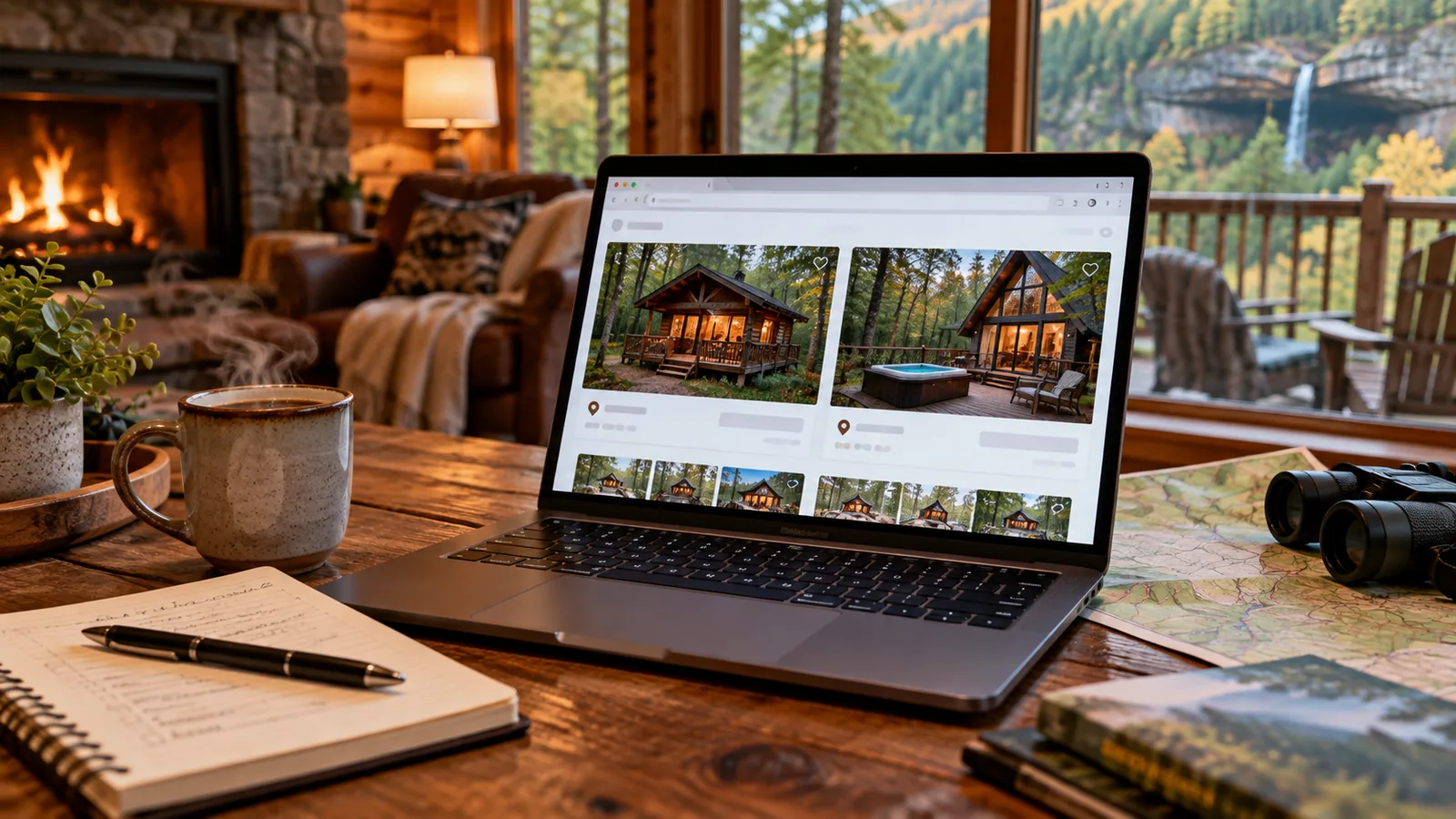
A guest asks for a romantic cabin in Hocking Hills. One owner replies, “Yes, available—send a deposit.” Another replies with a clear description of the property, the dates actually open, the total cost, and answers about the amenities the couple cares about. The second response makes it easier for the guest to make a decision and for the owner to avoid a booking that is wrong for both sides.
This checklist is written for cabin owners, property managers, and people helping connect guests with accommodations. It also helps travelers recognize a complete offer. A good response should be specific enough that the guest can compare properties without guessing—and honest enough to say when an important detail is unknown.
Start with the request you actually received
Not every guest is seeking “a cabin.” They may want a quiet anniversary stay, a family reunion, a pet-friendly retreat, or two neighboring rentals. Begin by identifying the practical constraints: arrival and departure dates, number of adults and children, approximate budget, bedrooms required, pets, mobility considerations, and major must-haves.
Some needs are preferences; others determine whether the accommodation works at all. A guest who needs two separate bedrooms cannot be matched with a one-bedroom cabin merely because the sofa opens into a bed. A person who requires step-free access needs precise information about entrances and bathrooms, not a generic “comfortable for all ages” description.
If the inquiry is incomplete, ask two or three targeted questions rather than sending an enormous questionnaire. For example: “Are your dates fixed? How many separate sleeping rooms do you need? Is a private hot tub essential?” Use the answers to narrow the match.
Confirm availability from the current calendar
Availability changes. Verify it in the property-management system or with the owner before telling a guest that dates can be booked. Specify the check-in and check-out dates, required minimum nights, and any booking hold. If you are quoting a range of possible dates, say which exact nights were reviewed.
Do not describe an unconfirmed calendar screenshot as a guaranteed reservation. Explain when a quote expires and whether availability is held without payment. If a property is not available, offer alternative dates or a comparable property only if that alternative’s details are verified separately.
The guest should know whether the booking will be made directly with the operator or through a platform, and whether any additional platform terms apply.
Describe the sleeping arrangements precisely
“Sleeps eight” is not the same as “four bedrooms.” List actual bedrooms, bed types, pullout sofas or bunks, and any loft or shared-space sleeping arrangements. Tell guests when stairs are required to reach sleeping areas. Avoid confusing a primary suite with a bedroom that simply has a larger bed.
For groups, explain the maximum occupancy rules, whether infants count toward limits, and the policy on daytime visitors. Never promise exceptions that have not been approved by the owner. If two families are traveling together, ask whether they value separate bathrooms, privacy, or equal-quality bedrooms.
Make the location usable, not just attractive
“Hocking Hills” covers different places and driving conditions. Share an accurate location or general vicinity appropriate for the booking stage. Clarify realistic access to the guest’s planned activities without inventing drive times. Road conditions, weather, seasonal congestion, and the exact driveway can all affect travel.
Mention driveway steepness, gravel or paved access, parking limits, and whether a particular vehicle type may struggle in poor weather. Confirm GPS instructions and how guests should find the entrance after dark. Rural check-ins can be stressful when a keypad code is missing and cellular reception is weak.
Verify the features that often determine a booking
Guests may select a cabin for a hot tub, fireplace, game room, outdoor seating, lake access, or pet allowance. Don’t rely on an old listing. Confirm the amenity is present, operating as expected, and available during the requested stay.
Ask about hot-tub privacy, operating rules, any servicing schedule, and whether there are restrictions. Confirm whether fireplaces are wood-burning, gas, or decorative, and what fuel or instructions are supplied. Clarify Wi-Fi availability and whether the operator can provide recent speed-test results if reliable connection matters for work.
A photo of a firepit does not establish that burning is permitted every day. Weather advisories and property rules can change what guests may use. If a feature is temporarily unavailable, disclose it before taking a payment.
Quote the entire cost, not the headline nightly rate
The guest should see the nightly rental subtotal, cleaning fee, pet fee if applicable, taxes, refundable security deposit, service or platform charges, and any required additional services. When some taxes or platform fees are calculated later, label the number as incomplete and explain where the final total can be confirmed.
Spell out deposit due dates and accepted payment methods. Some operators use third-party platforms; others invoice directly. A guest should know who receives payment and which legal entity or individual is responsible for the reservation.
Make cancellation and refund terms easy to find. Include when each rule applies and whether it differs for holidays or special events. The guest should not learn about a nonrefundable commitment only after paying.
House rules should answer questions before conflict begins
State occupancy, guest registration requirements, quiet hours, outdoor music, smoking, pets, parking, events, minimum age to book where applicable, and any restrictions on exterior visitors. Be direct about fees or consequences that are genuinely part of the booking terms.
Avoid vague descriptions like “parties generally allowed” if the owner has strict visitor or noise limits. A guest planning a family birthday is not the same as someone planning a quiet weekend. Neither is inherently a bad customer, but the property must fit the intended use.
If the owner is willing to consider an exception, obtain explicit written approval before promising it. Keep the final rules with the confirmation so expectations remain consistent.
Explain accessibility with facts, not labels
A property described as “accessible” should support that description with specific measurements and features. Ask about exterior steps, doorway widths, interior stairs, bathroom access, shower type, handrails, and the route from parking to the entrance. Don’t promise compliance with a technical accessibility standard without verification.
Guests with limited mobility may also need to know bed height, whether a main-floor bathroom exists, and whether the pathway is safe after rain. A factual answer allows the traveler to assess suitability with their own needs in mind.
If you don’t know a measurement, take it or say it remains unverified. Guessing can create a safety issue and damage trust.
Respond to companion animals and pets carefully
Pet-friendly is not one universal rule. Confirm species restrictions if any, number of pets, size limitations, fees, furniture rules, and cleaning expectations. Clarify outdoor areas and whether fencing is actually enclosed. Do not assume a yard is secure simply because a photo shows a wooden fence.
Service-animal requirements can differ from ordinary pet policies and may involve applicable disability laws. Owners should seek appropriate legal guidance on compliant policies rather than treating the two categories as interchangeable.
Do not promise allergen-free accommodation without reliable evidence.
A short response template that works
An effective reply might say: “Thanks for your request for [dates] and [guest count]. We checked the calendar for [property] and it currently shows [availability status]. The property has [bedrooms and bed types], [relevant amenities], and [access notes]. The estimated total is [amount], broken down as [charges], subject to [terms]. Here is the cancellation policy and the booking method. Would you like clarification on any of your must-haves before deciding?”
Use exact facts rather than filling gaps with upbeat adjectives. Never insert a rate, amenity, or available date until it has been confirmed. Guests appreciate a straightforward “I need to check that” when it is followed by a genuine answer.
How to work with a referral or matching website
If a site such as HockingCabins forwards an inquiry, the owner should receive the minimum details needed to check fit and availability. Agree in advance which contact methods are permitted, who replies to the traveler, and how the inquiry is tracked without sharing unrelated personal information.
A referrer can help structure the request, but the operator remains responsible for confirming property conditions, actual availability, prices, and rental terms. If a referral or commission arrangement applies, define the conditions in writing so neither party has to infer them after a guest books.
Operators can also share an updated property information sheet with fixed facts, while treating prices and dates as live data. This makes repeat replies faster without turning yesterday’s availability into today’s promise.
Follow up without creating pressure
If the guest has not replied, one concise follow-up can ask whether their dates or requirements changed. Do not send a series of artificial scarcity messages. If the price or availability changed before a reservation was confirmed, communicate that clearly instead of pretending the original quote is still valid.
Keep a record of the guest’s preferences and the property shown, subject to your privacy obligations. The aim is to prevent someone from recommending the same unsuitable cabin repeatedly when a better match might exist.
Turn inquiries into useful improvements
Review common reasons a lead does not convert. Are guests repeatedly surprised by cleaning charges? Are photos missing the second bedroom? Does the owner lack reliable information about access after snow? These are opportunities to improve listings and operational procedures, not merely marketing performance.
A simple response-quality scorecard can track whether each inquiry received a calendar check, sleeping layout, full price, critical rules, cancellation terms, and a clear next step. Owners who answer those items consistently make better partners for travelers and matching services alike.
The best owner response is an accurate one
HockingCabins can help guests communicate dates, group size, budget, and their most important requirements. Owners can improve matching by providing complete property facts and timely confirmation, while retaining control of booking decisions and terms. The goal is not to maximize replies that say “available”; it is to connect each traveler to a cabin that genuinely suits the stay.
Reference material for editorial review
- Ohio Department of Commerce, tourism and lodging resources: https://com.ohio.gov/
- U.S. Federal Trade Commission, Consumer advice about rental listings and scams: https://consumer.ftc.gov/
Cabin availability, nightly rates, property rules and amenities must be confirmed directly with the operator before booking.