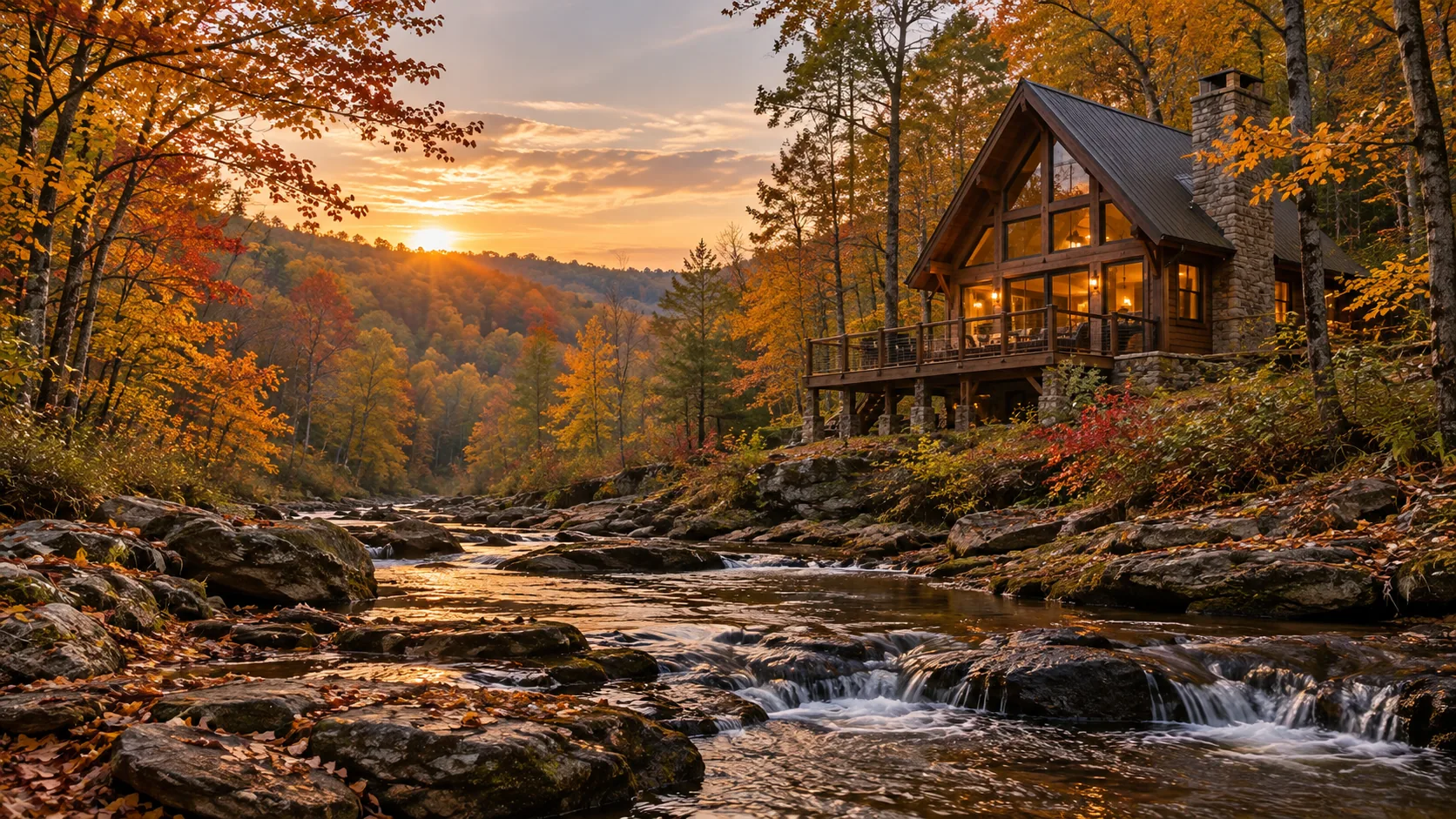
An evening arrival at a Hocking Hills cabin can sound simple: finish work, pack the car and drive directly to a quiet rental in the woods. The details become more important after dark. Rural roads may have limited lighting, a driveway may be difficult to recognize, a keypad may be unfamiliar, and the person who manages the property may not be available to answer a call immediately. None of these issues has to ruin the trip when the information is gathered in advance.
This guide is a practical arrival checklist for couples, families and groups booking cabins in the Hocking Hills region of Ohio. It does not claim any specific road or property is unsafe. The point is to ask each operator about the actual entrance, check-in method and property conditions rather than assume every cabin works like a hotel.
Confirm the exact address and entrance instructions
A rental’s marketing name or map pin may not be the same as the entrance address a driver needs. Ask for the complete street address, the correct driveway, and any landmark the operator recommends using. Some cabins share a long drive or have multiple buildings on one parcel. Ask whether the GPS route is reliable all the way to the parking area.
If the owner sends a map link, open it while you still have a stable connection and compare the destination with the written address. Save the instructions offline where possible. Do not rely on screenshots cropped so tightly that the final turn or driveway is missing.
Get the actual check-in window in writing
A listing may state that check-in begins in the afternoon while still imposing restrictions on very late arrivals. Ask for the earliest available access time, whether late self-check-in is permitted, and what to do if traffic or weather delays you. A property with contactless entry may be more flexible than one requiring a staff handoff, but the operator’s written rules control.
Confirm whether someone needs to inspect your identification, whether a deposit must clear before the code is released, and what happens if your phone dies on the way. If multiple families are sharing the rental, ask whether every driver may enter separately or only the reservation holder receives instructions.
Understand the lock, keypad or key-box process
A code alone may be insufficient if the keypad requires a specific button sequence, if the door has a second deadbolt or if a lockbox sits away from the front entrance. Request a brief written explanation and, when available, a photo of the actual device or entrance. Ask when the code activates and whether it expires during the stay.
Never publish access codes in a large chat group that includes people not staying at the property. Share them only with authorized guests and remove them from shared documents when the trip ends. If a code does not work, use the owner’s official contact process rather than forcing a lock or asking a stranger to open the door.
Verify the emergency number or after-hours contact. A reservation platform inbox may not be monitored during a late arrival.
Ask about driveway, parking and vehicle access
Hocking Hills rentals differ widely in driveway shape, surface, slope and parking arrangements. Ask whether the approach is paved, gravel or another surface; whether it is steep or narrow; whether there is room to turn around; and whether the operator recommends particular vehicle capabilities in certain weather. The renter should not guess from a summer photograph how the drive will perform in rain, snow or darkness.
Confirm how many vehicles are allowed and where overflow parking is permitted. For large groups, a driveway filled with cars can block access for other guests, service vehicles or emergency responders. Ask if trailers or oversized vehicles are allowed.
If a visitor requires accessible parking and a short path to the entrance, request current measurements and photos. A listing described as “secluded” does not tell you whether steps or uneven surfaces are present.
Check for lighting and a clear walking route
Ask where guests should park and how to get from the vehicle to the correct entry door. Is exterior lighting controlled by a switch, sensor or timer? Are there stairs between the lot and the entrance? Is there a railing? A headlamp or phone flashlight is a useful backup for ordinary travel, but not a replacement for a safe route that meets the group’s needs.
If elderly relatives, small children or travelers with limited mobility are coming, share that information only as needed for access questions. Request photographs of the actual arrival route, including steps and door thresholds. Do not assume an accessible cabin based on indoor photos alone.
For safety, unload the people and essentials first rather than carrying every bag in the dark while trying to locate the correct door.
Know which utilities are ready on arrival
After a long drive, guests may want to know how to turn on heat, find hot water or access the internet. Ask whether the thermostat is preset, whether bedding is already provided and whether there are any instructions for water, septic systems or appliances. If a hot tub or fireplace is advertised, request the operating rules, age restrictions and any hours of use—do not assume immediate access.
A property should supply safety information such as emergency exits, smoke or carbon monoxide alarms where applicable, and instructions for reported problems. If an alarm sounds or a dangerous condition is suspected, follow emergency procedures rather than attempting an untrained repair.
Ask where the guest information binder or digital guide can be found. Downloading it before arrival can prevent unnecessary late-night calls.
Plan around limited reception without assuming a blackout
Cellphone coverage may vary with carrier, location and terrain. Ask the operator which communication methods work reliably at the cabin and whether Wi-Fi is available upon arrival. Save the Wi-Fi network details and any offline check-in instructions. Never rely exclusively on an app that needs internet access before you can enter the property.
If remote work is essential, request current speed information and ask about reliability rather than treating an “internet included” line as a service-level guarantee. Keep an independent communication fallback if your plans depend on connectivity.
For a group arriving in multiple vehicles, agree on a rendezvous point and a message protocol if someone loses signal.
Keep emergency and property contacts separate
The property manager can help with a broken keypad, missing linens or a question about parking. Emergency services handle urgent threats to health or safety. Save the relevant local emergency number and the property’s after-hours number. Ask for the full property address you could give to dispatchers if necessary.
Do not assume the owner can instantly provide roadside assistance or solve a medical emergency. Know which family member has the reservation details and can communicate with responders or the operator.
If a storm or road closure affects access, do not improvise travel over routes marked closed or unsafe. Contact the operator for guidance and use official transportation and weather information.
Review rules before the first guest enters
Cabin rules can cover guests, quiet hours, pets, smoking, fires, hot tubs, trash, food outdoors and parking. Send the important parts to your group before arrival instead of asking everyone to read the full contract in the driveway. If the rental restricts visitors, make sure the people in additional cars are actually covered by the reservation.
At check-in, photograph any obvious damage or missing items and notify the operator through the agreed channel. Use respectful documentation; do not record private neighboring areas. Clarify whether towels, supplies or linens should be reported immediately if missing.
A quick walkthrough helps avoid avoidable disputes at checkout and identifies any comfort problems before the operator’s daytime support hours end.
Make an arrival checklist for the last hour of driving
Before you lose reliable connectivity, confirm the correct navigation destination, ETA, access code, authorized guest count, vehicle parking locations, and any instructions specific to weather. Make sure the driver’s phone has power. Put the code and directions where the responsible adult can find them without hunting through old messages.
If the group has children or pets, assign an adult to supervise them while others handle unloading. Start with lights, safe entry and essentials; postpone setting up decorations, operating a fire feature or exploring unfamiliar trails until conditions are appropriate.
A calm arrival is usually more enjoyable than rushing into every amenity at once.
Ask about late-arrival costs and changes
Review whether late check-in carries a fee, whether unused first-night time is refundable, and what happens if the operator cannot provide access. Ask whether delays caused by weather or travel disruptions qualify for rescheduling under the rental agreement. Avoid assuming a flexible policy based on informal messages or another guest’s review.
Keep the reservation and written confirmations, particularly when multiple people are paying. When booking through a platform, confirm whether the owner or platform is responsible for particular support and payment processes.
A short check-in message to send the owner
“Hi! We’re arriving after sunset on [date] with [number] adults and [number] vehicles. Could you confirm the exact property address, best driveway/GPS instructions, late check-in permission, code or lockbox procedure, parking locations, exterior lighting, and after-hours contact? Please also let us know about any weather or vehicle-access considerations.”
This message gives the owner useful information without requesting access to a property you have not booked. Save the answer with your reservation details.
Choose a cabin that makes the whole trip easier
The best cabin for a late arrival is not necessarily the closest or most photogenic. It is one whose operator clearly explains access, parking, check-in conditions, accessibility and support. A few specific questions before payment can spare a tired group from avoidable confusion at night.
HockingCabins can help collect a cabin match request using dates, party size, budget, vehicles and accessibility needs. Ask each owner for verified property-specific arrival instructions, and do not treat generic regional advice as a guarantee about a particular cabin.
Reference material for editorial review
- Ohio Department of Natural Resources, Hocking Hills State Park visitor information: https://ohiodnr.gov/go-and-do/plan-a-visit/find-a-property/hocking-hills-state-park
- National Weather Service, forecasts and alerts: https://www.weather.gov/
Cabin availability, nightly rates, property rules and amenities must be confirmed directly with the operator before booking.